Showing posts with label Nika Calilung. Show all posts

Saturday, March 5, 2011

Just One Touch, Now Baby I Believe

How do you know if someone likes you? Not just like you, but like you like you? On the other hand, how can you at least drop a hint that you like someone or find him/her attractive? I have a friend—who is not me—who once shared a method she likes to call “the sabay touch”. Ooooh. Basically it’s when you make a gesture and simultaneously touch an area between the object of your affection’s shoulder to hand. So when he makes a joke, by all means laugh in utmost appreciation (not like a maniac, of course) and place your hand on his shoulder, as if labelling him to be one funny guy. If he is conveying his thoughts, nod intently as you reach out for his hand, assuring that your attention is with him.

Such a method seems more plausible for females applying it on the opposite sex rather than the other way around. I don’t know, but it’s unlikely to see a buff dude reaching out for lady shoulders. Worst case scenario is female taking the touching behaviour of the male as inappropriate, which can lead to suspicion of sexual motivation.

Yes, like so.
Apparently, some scientific evidence shows support for my playful pal’s ploy. A study by Guegen (2010) explored how a woman’s touch can affect men’s behaviour, specifically in the courtship context. 64 single men aged 18-25 were selected randomly in an area of a bar. A female confederate would move to a participant’s table when he would sit on a chair in that area. The confederate would then show difficulty in doing a task with her keys, after which she would stand ask the participant for help.

When the participant completes the task, she would get the keys back, smile openly, and thank him. According to a random distribution, the confederate—while in the middle of thanking—was instructed to slightly touch the forearm of the male participant for one to two seconds. Finally, she would return to her table and look at the street. If the male approached her to initiate a conversation, she would say that she has to leave due to an appointment.

Through a chronometer, an observer was instructed to note if the participant did approach the confederate and have a conversation with her. If no verbal contact took place, the observer would note how many times the participant glanced at the female and for how long. This was accomplished through a metronome with a light vibrator that was set on 60 beats per minute. Apparently, this study had a few wicked gadgets involved.

Now how 'bout some skin food?
Anyway, results showed that a slight tactile contact was associated with a decrease in the male participants’ latency to approach the female confederate. In addition, touch is also associated with an increased number of glances at the confederate, as well as the duration of each glance. In summary of the study, touch seems to contribute to the positive evaluation of and interest with the toucher, and that the concept of touch in the courtship setting  can be a good non-verbal communication factor in regulating male-female relationships.

So let me get back to my friend—who truly is not me—for more tricks up her sleeve. We got mouth for whispering sweet nothings, reciting literature, and singing silly love songs, but you can count on skin once in a while too. Show some, use some. It is the biggest organ, after all.

Source: Gueguen, N. (2010). The effect of a woman’s incidental tactile contact on men’s later behaviour. Social Behavior and Personality, 38(2), 257-266.

Saturday, February 19, 2011

All That Jazz

Traditional Irish music and modern pop-rock band ‘The Corrs’—sadly, sadly not performing anymore—have touched the hearts of listeners from all over the world. In one of their live acoustic sessions, the pianist makes a mistake in the last note, hence producing tension that was left unresolved. The guitarist jokes about it by uttering, “Jazz.”

They say that this kind of music is the hardest to appreciate. I wouldn’t be surprised, since it’s also one of the most difficult to learn. Progressions are not easily detected, and the randomness of sounds is usually taken by many musicians as an excuse to make mistakes. Different genres have had their share of the research limelight. There is the Mozart Effect for classical, and associated aggression and violence for Hip Hop. What about jazz and people’s perceptions of it?

No, not this Jazz.
Gridley (2009) studied the interaction between music and emotions, particularly anger. The Spielberger Trait Anger Test was administered to 287 undergraduates of the Cleveland State University. After that, a jazz saxophone improvisation was played to them, and after listening, they were asked asked to rate its emotion. Results showed that students who rated the recording as angry had a significantly higher trait anger score than those who rated it as friendly. The correlation between listener perceptions of anger in the sax solo and listener scores on the trait anger inventory was small, but significant.

These findings suggest that it is the personality that heavily influences our emotions, which further influences our perceptions on music. In other words, a sanguine personality is likely to rate the recording as less sad than the melancholic ones. Other components of personality could be considered too. In the Big Five for example, those higher in agreeableness are expected to have the least angry ratings. Either way, the influence of jazz per se remains varied; its emotional content ambiguous due to individual differences.

Or are you not a fan? 
Jazz interests me nonetheless because it's unpredictable. I'm not exactly an enthusiast, but I believe that over time, it could make us perceive things that no other genre can. But for now, we just conclude that it isn’t dependable in expressing emotions. Maybe that’s why it isn’t as mainstream as the rest. The serenading suitor would probably stick to ballads or movie themes to woo his loved one, especially if he don’t wanna wake up alone anymore. Still believing you'd walk through my door. All I need to know is... (you do know the lyrics to this, right?)


Source: Gridley, M. (2009). Trait anger and music perception. Creativity Research Journal, 21(1), 134-137. 

Saturday, February 5, 2011

Pay attention please.

I’ve always been interested in fitness activities. As far as I can remember, it started with joining the Dance Club with no experience at all in the third grade because the Computer Club—my first choice—was full. It was so awkward at first, observing myself in the mirror. I mean I do get the moves eventually, but I wasn’t that raw talented dancer who struts the stuff oh-so effortlessly. And that’s okay! Because I also remember enjoying the thing itself, music blasting as you drown in awkwardness and come to laugh at it with your fellow club members.

Besides self-motivation, it was also our teacher who kept me going. Not that I aspired to be anything close, but watching her at her element was reinforcing. I found myself paying attention to her reflection in the mirror more than mine, and it must've contributed to my awakened impetus to move more, explore more, and try out other sweat-inducing forms of exercise.

In a study by Calitri et al. (2009), associations between previous physical activity and both implicit and explicit attitudes were investigated, including visual attention and activity motivation. They found that higher levels of physical activity were associated with positive implicit attitudes as well as an attentional bias towards exercise cues. In other words, the more extreme the person’s implicit attitude towards exercise (positive or negative) is, the greater his or her attentional bias to exercise cues will be.

 How’s this for a cue?

Also, the study indicated that such exercise cues were not equally relevant for every individual. In a live basketball game, for example, a swimmer in the audience probably wouldn’t notice how one player managed to score despite being double-teamed by his opponents. He may have seen the play, but a basketball hobbyist sitting beside him would’ve perceived it as an amazing, I’ll practice-more-‘cause-I-wanna-do-that-too sequence of historical events in the realm of hoops.

In my case, being familiar with the style and starting to give meaning to that dance class led me to pay more attention to what my teacher was choreographing—especially the moves that fascinated me—which further led to increased enthusiasm. In my case at present however, I wouldn’t pay as much attention to cues sent by people like my teacher anymore because as mentioned earlier, I did jump from one fitness activity to another. And as a college student who doesn’t get to exercise often, I involved myself in the convenience and elegance of jogging. Hence, visual attention is directed to a different set of cues.

This study can definitely be applied to the encouragement of a healthy/active lifestyle. The motivation is there for many of us, but the real challenge is maintaining its existence in our systems; so that we keep on going and not let all our efforts go to waste, whether it’s a goal weight we’re trying to drop down to or decreasing the chances of certain diseases to develop. Well we can start by simply being more sensitive to perceptual cues; learning to identify which stimuli can help us, for example in having seconds thoughts about eating another slice of cake, or extending our run to one more round in the Acad Oval. In the two modes of transportation below, which would you choose to take? Of course It would depend on the interaction of your current situation and goals, your internal and external intentions. But in the end, one factor always, always squeezes itself in the equation.


Attention is part of the decision.

Source: Calitri, R., Lowe, R., Eves, F., & Bennett, P. (2009). Associations between visual attention, implicit and explicit attitude and behaviour for physical activity. Psychology and Health, 24(9), 1105–1123.

Saturday, January 22, 2011

MJ was right. It don't matter if you're black or white.

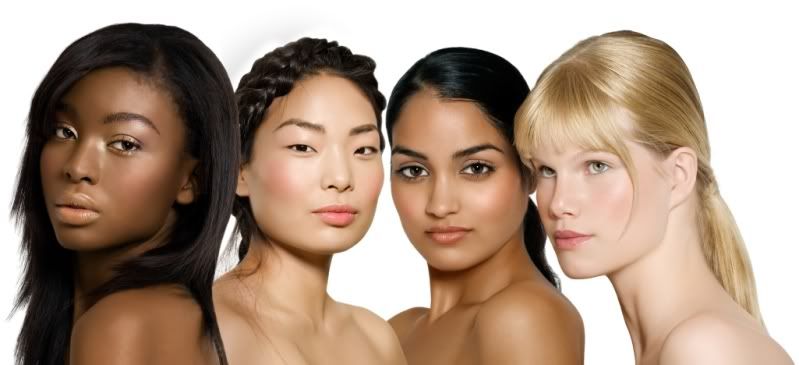
Humans evaluate their surroundings for survival. In the realm of romantic relationships, humans evaluate the opposite sex in correspondence to what they perceive as attractive. Swami, Furnham, and Joshi (2008) investigated the role of skin tone, hair color and hair length in perceptions of women’s physical attractiveness, health and fertility. I'll be focusing on the first (i.e., physical attractiveness) since it's the aspect that is most immediate and directly related to what we have discussed so far, which is vision and visual perception.

In the study, 130 men and 112 women rated 12 line drawings that had variations in three levels of skin tone, two levels of hair color, and two levels of hair length. These phenotypes proved to interact with one another, thus having high correlation. Among the categories, again I'll just be focusing on one (i.e., skin tone), since hair color resulted to have a weak effect on attractiveness. As for hair color, well, no Filipino is naturally blonde so delving deeper into such a category would be pointless when applied to the Philippine context. Anyway, going back to skin tone, it was found in the research that light-toned figures were rated the most positively.

Surprised? Didn't think so. 

The researchers did ensure that there was no variance in ethnic backgrounds by sticking to participants of European Caucasian descent. Such a set-up just goes to show that each of us—or each ethnicity, as far as this study is concerned—has a corresponding preference for perceiving what is attractive. If the British residing in Greater London find brunette, fair-skinned women most attractive, what about the Filipinos in Metro Manila? Would those from Palawan or Cebu or Davao make a difference? What do we Asians—or Pacific Islanders, as others have debated—find physically attractive, in general?

Observing the present, more Filipinos are leaning towards the same preference as that of the participants in the study, particularly that of skin tone. In fact, a survey conducted by Synovate last 2010 highlighted the fact that the Philippines had the highest usage of skin whitening products among the countries included in the survey. According to the results, one out of two women claims to use such products, followed by Hong Kong with 45%, Malaysia with 41%, and Taiwan with 37%. Such a study contributes to the reality that visual perception being a big part of attraction exists, and will persist. Each shelf of cosmetic items we pass by in the grocery and department stores strengthens the awareness that what we see outside matters a lot, and right now outside matters a lot, and right now—for the Filipinos at least—what matters is whiter skin.

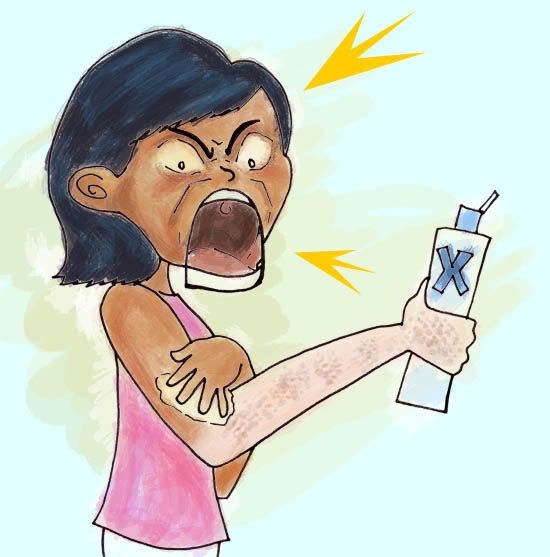
We have thought of transforming the kayumanggi to utter maputi in every application imaginable; topical, injectables, medication, soaps, lotions, even facial wash. Dove even produces these segment advertisements which I honestly find ridiculous, since it’s about a relationship being torn apart thanks to the third party’s blindingly white complexion, which society subliminally views as beautiful. And it does! The knowledge has been implanted that being fair brings flair, that whiter is better. Our neurons have reorganized themselves into this approach, affecting how we recognize and appreciate what is aesthetically pleasing to the eye. In other words, the market is successful in incorporating new information, to which society has welcomed with oh-so open arms, not to mention our reaction of pleasure. Or could it be pleasure behind six layers of pain?

Beauty over misery!

Advertisements and endorsing celebrities are not to be blamed completely for this phenomenon, though. In my opinion, there’s a much older source of knowledge contributing significantly to this, and that can be no other than Spanish colonization. Indeed the one mestiza cell has been transferred from the invaders to the invaded and stuck there, proliferating for three whole centuries. With a period that long followed by the Americans, it wouldn’t be surprising to notice what now resulted to the present generation’s modified standard of beauty. Heck they are scampering to the beach every spring break to have that to-die-for tan, while we execute strategies to have the opposite. Funny, but that's the way some things go.

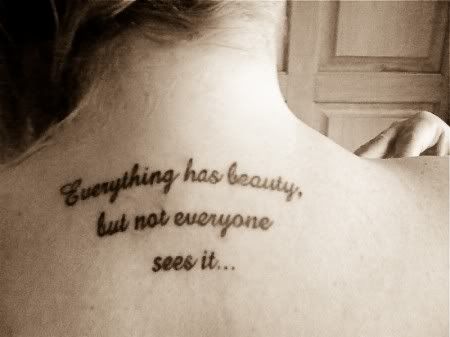
In the end, it is a realization that different cultures and ethnicities have their own perception of what looks good, is attractive, and beautiful. It just upsets me how exaggerated the need for becoming lighter has become. Filipinos having complexions darker than the typical brownness are poked fun at. Some sacrifice outdoor activities almost completely because of the restrictions employed by the products. These are sad actualities that need not happen. Sure, it is a free country, and we have the right to modify skin tone, hair color, or hair length. We can change our standards for beauty, just as long as we don't interfere with standards of others. We can change how we look for the sake of attraction, just not the respect we have for our fellowmen. After all, as far as beauty is concerned...

Agree? Of course you do.


Source: Swami, Furnham, & Joshi (2008). The influence of skin tone, hair length, and hair colour on ratings of women’s physical attractiveness, health and fertility. Scandinavian Journal of Psychology, 49, 429–437.